
Studied several times
Endurance and resilience
Several controlled studies show better exercise tolerance and a higher maximum oxygen uptake, especially in older people.
How the training works, which effects are well supported and where research is only just beginning.
Hundreds of mitochondria work in every cell. They supply the energy you need for everything, from thinking to running.
In the altitude phase the oxygen in your blood drops in a controlled way. The cells detect this through the protein HIF, the oxygen sensor whose discovery won the Nobel Prize in 2019.
The body responds with adaptations: weak mitochondria are broken down and new ones are built. Blood formation and vessels are stimulated too, much like during a stay in the mountains.
In the recovery phase you get oxygen-rich air until you are fully saturated again. The alternation trains your adaptability and your nervous system calms down.
With an assessment of how well each effect has been studied so far.
Several controlled studies show better exercise tolerance and a higher maximum oxygen uptake, especially in older people.
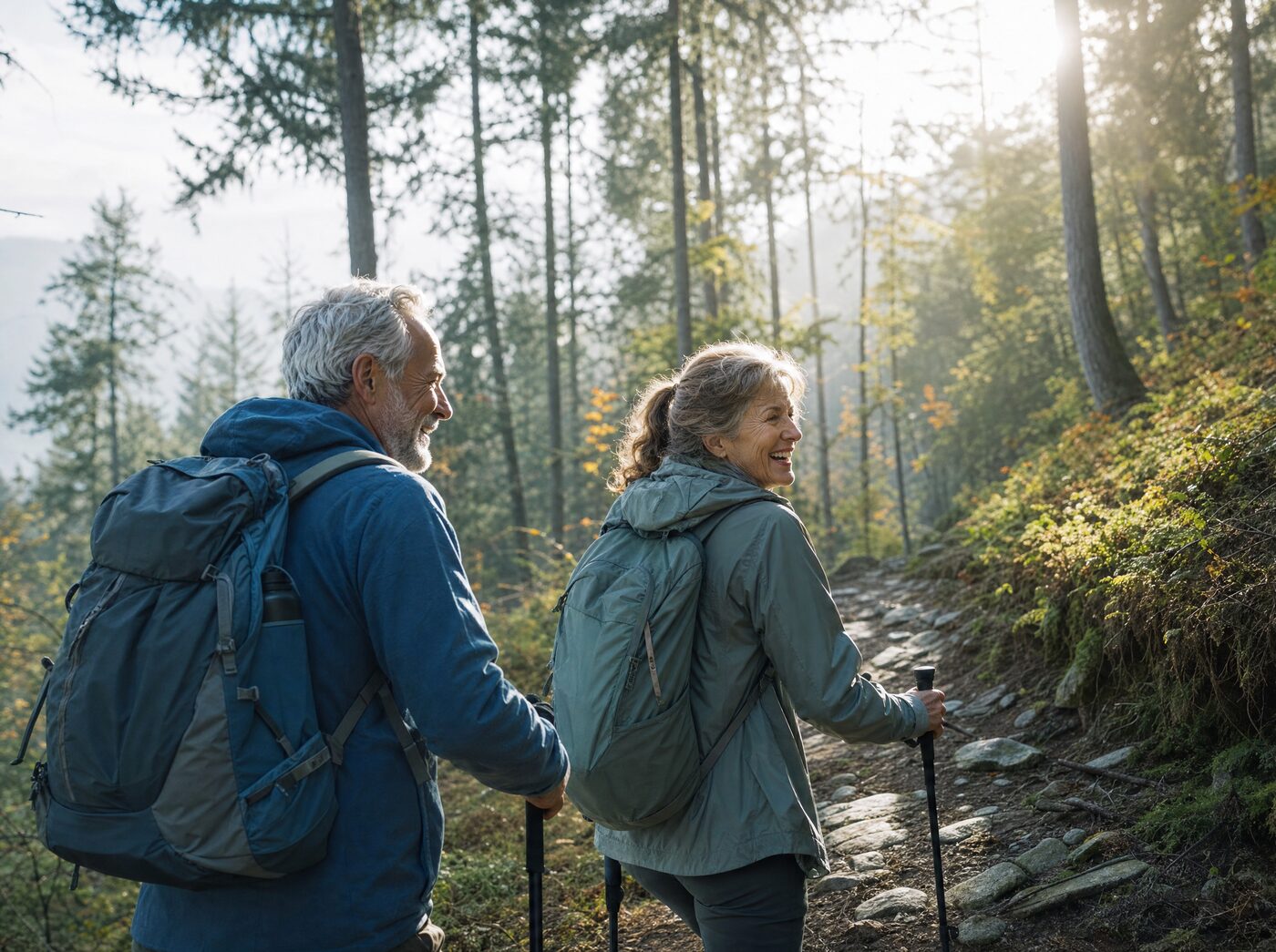
In older participants, memory and concentration tests improved considerably more than in the comparison groups.
Several studies found a trend towards lower systolic and diastolic values after a few weeks of training.
The 2022 review reports lower blood sugar levels in the groups studied.
Some studies saw better cholesterol values, others did not. The evidence here is not yet clear.
I work exclusively with adaptive hypoxia and hyperoxia. The device follows your blood, not a rigid table. Move the target saturation and slide across the chart.
Oxygen saturation (SpO₂) shows what percentage of your red blood cells are currently loaded with oxygen. At rest it is usually 96 to 99%. During training it may drop in a controlled way, down to a value we set beforehand: your target saturation. The lower this value, the stronger the altitude stimulus. Beginners start more gently, experienced users go lower. The device makes sure you never go below this value.
Excerpt: 2 of about 5 cycles. A session repeats this alternation about five times, around 40 minutes in total.
Schematic illustration. Target, pace and number of cycles are tailored to you individually.
In a randomised study, older people trained for several weeks. Half of them also received IHHT. Tap a measure.
Change after 5 to 7 weeks. Bayer et al. 2017, 34 participants aged 64 to 92, randomised controlled.
2022 · Behrendt et al. · Sports Medicine - Open
Systematic review of 8 controlled studies on alternating hypoxia and hyperoxia.
Improvements in exercise tolerance, maximum oxygen uptake and cognitive performance, as well as lower blood sugar levels. A trend towards lower blood pressure. Blood lipids mixed. The authors call for larger studies.
View the study on PubMed2017 · Bayer et al. · Alzheimer's & Dementia: TRCI
Randomised study with 34 participants aged 64 to 92, IHHT in addition to an exercise programme.
Considerably greater improvement in the memory and clock drawing tests and in the 6-minute walk test than without IHHT. Well tolerated even at an advanced age.
View the study on PubMed2022 · Bestavashvili et al. · Biomedicines
Randomised study with 65 participants with metabolic syndrome, 3 weeks, 5 sessions per week of 45 minutes each, control group breathing room air through the mask.
Systolic and diastolic blood pressure fell markedly and were then lower than in the control group. Total and LDL cholesterol decreased moderately in the IHHT group.
View the study on PubMed2022 · Behrendt et al. · Frontiers in Physiology
Randomised, single-blind study with 30 participants aged 72 to 94, 6 weeks of IHHT before ergometer training.
Lower systolic blood pressure, no lasting change in blood lipids.
View the study on PubMed2019 · Serebrovska et al. · International Journal of Molecular Sciences
Pilot study with older people with mild cognitive impairment, 3 weeks of IHHT versus sham treatment.
Better results in memory tests after the training; the effects partly lasted for a month.
View the study on PubMedThe studies partly examine different devices and protocols, often with small groups. IHHT is a training and wellness service, not a medical treatment, and does not replace medical care. Study results cannot be applied to every individual case.
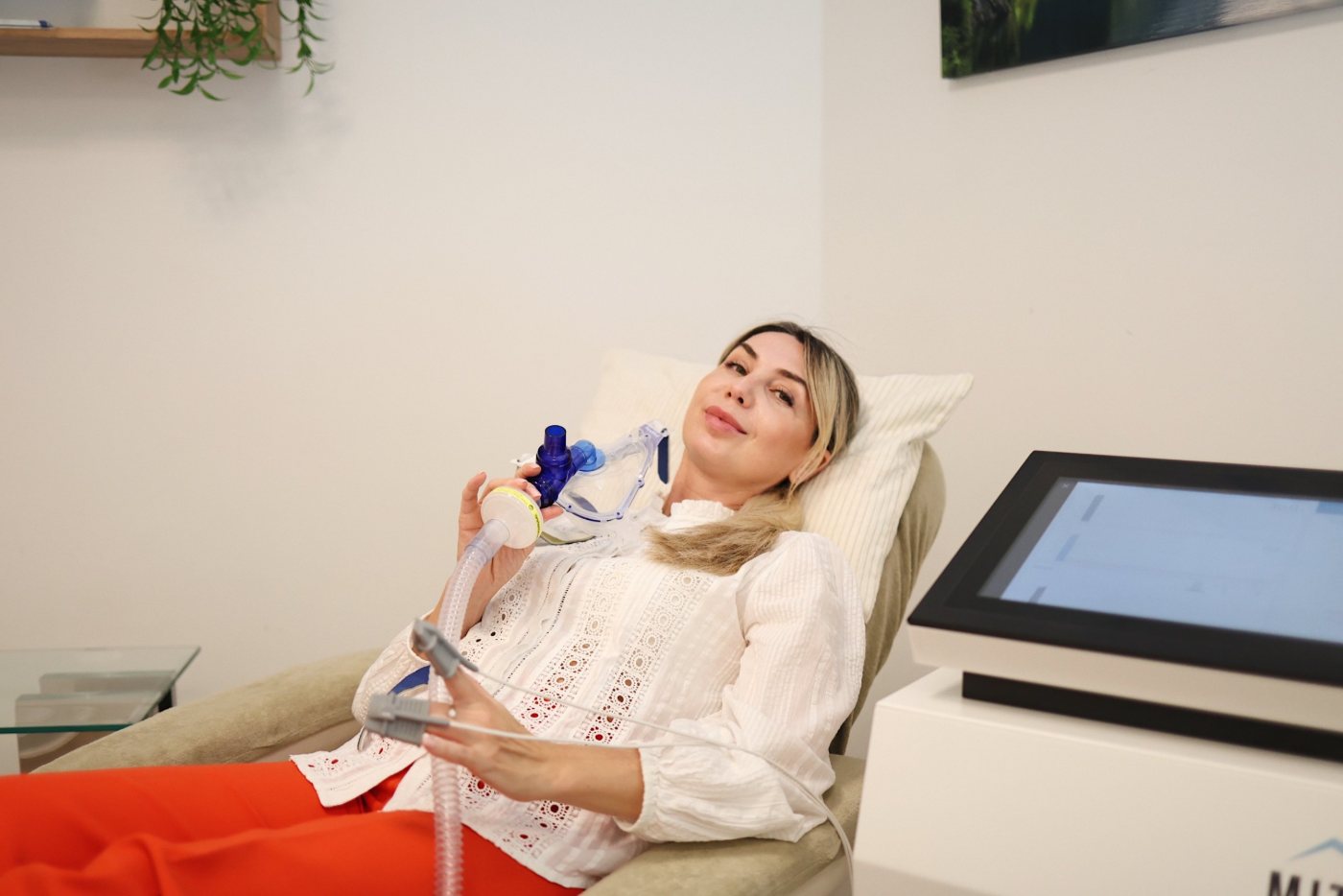
The first session begins with a personal conversation and the hypoxia test.